How Developers Can Build and Protect Their Online Reputation
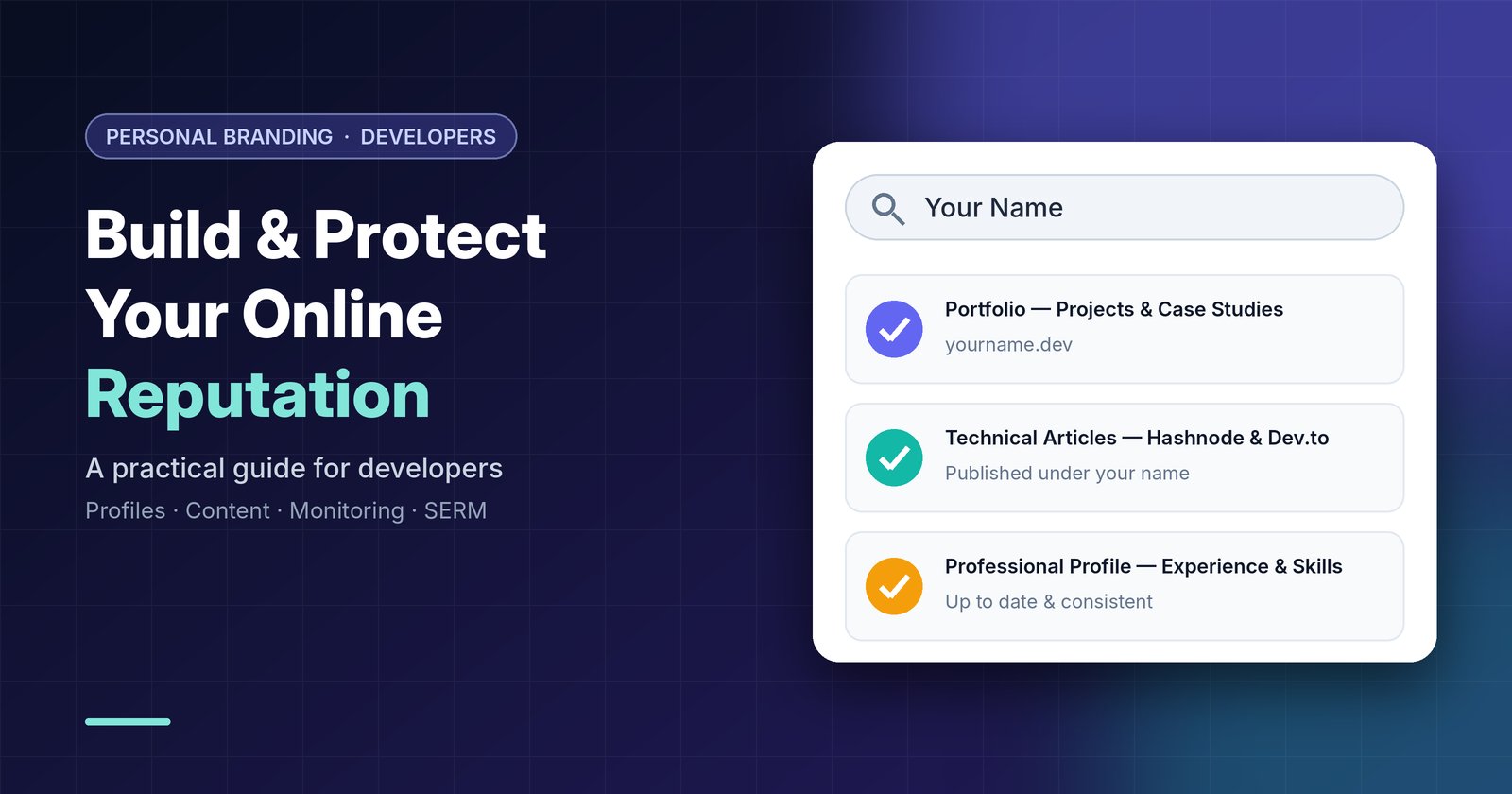
In the technology industry, your skills and experience are important, but they are not the only things that influence your professional opportunities.
Your online reputation can also play a significant role in how potential employers, clients, collaborators, and other developers perceive you.
Imagine a company considering you for a software engineering position. Before scheduling an interview, the hiring manager searches your name on Google. They find your GitHub profile, LinkedIn account, technical articles, and perhaps some public discussions or comments.
Within a few minutes, they have developed an initial impression of you.
This is increasingly common in a digital-first professional environment. Your online presence is an extension of your professional identity, and managing it effectively can help you build credibility and establish trust.
Let's explore how developers can build, maintain, and protect their online reputation.
1. Understand What Your Digital Footprint Says About You
A digital footprint includes the information about you that is available online.
For developers, this may include:
- GitHub repositories and contributions.
- LinkedIn profiles and professional experience.
- Technical blog posts and tutorials.
- Stack Overflow answers and discussions.
- Conference appearances and interviews.
- Public social media accounts.
- Comments on developer communities and forums.
These platforms provide opportunities to demonstrate your knowledge, experience, and problem-solving abilities.
However, they can also reveal outdated information, abandoned projects, unprofessional interactions, or content that no longer represents your current professional identity.
Start by searching your full name on Google. Review the results and consider what someone unfamiliar with you might conclude from the information they discover.
Your digital footprint should reflect the professional image you want to communicate.
2. Build a Strong and Consistent Professional Profile
One of the easiest ways to improve your online reputation is to maintain professional profiles across relevant platforms.
Your LinkedIn and GitHub accounts are particularly important if you work in software development.
Your LinkedIn profile should clearly communicate your technical expertise, professional experience, certifications, and career interests.
Similarly, your GitHub profile should highlight projects that demonstrate your abilities.
Consider the following improvements:
- Add a professional profile photograph.
- Write a clear and informative professional introduction.
- Highlight your most relevant technical skills.
- Keep your employment history updated.
- Pin your best GitHub repositories.
- Include links to your portfolio and personal website.
Consistency also matters. Your name, professional description, and experience should be reasonably consistent across different platforms.
A well-maintained digital presence makes it easier for others to understand your professional background.
3. Share Your Knowledge Through Technical Content
Publishing technical content is an effective way to establish credibility within the developer community.
You do not need to be an industry expert to start writing. Sharing practical experiences, explaining concepts, and documenting problems you have solved can provide value to other developers.
For example, you could publish articles about:
- How you solved a challenging programming problem.
- Lessons learned while building your first application.
- Common mistakes when working with APIs.
- Your experience learning a new programming language.
- Useful tools and frameworks for developers.
- Troubleshooting issues in real-world projects.
Platforms such as Hashnode and Dev.to provide opportunities to share technical knowledge with a broader audience.
Over time, consistently publishing useful content can help establish your professional identity and demonstrate your commitment to learning.
The most valuable articles are not necessarily the most complicated ones. Sometimes, a simple explanation of a problem you recently solved can help hundreds of other developers.
4. Be Careful About Your Public Interactions
Developer communities encourage open discussions, technical debates, and knowledge sharing.
However, public interactions can also become part of your digital footprint.
Comments on forums, social media arguments, and public disagreements may remain accessible long after the original discussion has ended.
This does not mean you should avoid expressing opinions or participating in technical discussions.
Instead, focus on communicating professionally.
When disagreeing with another developer, explain your reasoning rather than making personal remarks. When responding to criticism, remain respectful and address the actual issue.
Your communication style can influence how colleagues, employers, and potential clients perceive you.
Professional behavior online is just as important as professional behavior in the workplace.
5. Address Negative Information About Yourself
Sometimes, developers discover unfavorable information about themselves while searching their names online.
This could include an old controversial discussion, inaccurate information, negative reviews, or outdated articles.
Ignoring such content may not always be the best approach, particularly when it appears prominently in search results.
The first step is to understand the nature of the information.
Is it accurate? Is it outdated? Does it violate the platform's policies? Does it contain misleading or defamatory statements?
Depending on the circumstances, possible solutions include:
- Contacting the website owner to request a correction.
- Requesting removal of information that violates platform policies.
- Updating outdated professional profiles.
- Responding appropriately to legitimate criticism.
- Seeking legal advice when content may be defamatory.
Not every negative result can or should be removed. However, inaccurate and outdated information should be addressed through appropriate channels.
6. Understand Search Engine Reputation Management
Search Engine Reputation Management (SERM) focuses on improving how an individual or organization appears in search engine results.
When someone searches your name, Google may display professional profiles, articles, social media accounts, interviews, and other publicly available information.
If negative content dominates these results, it may create an unfavorable impression.
SERM uses a combination of search engine optimization, content development, digital PR, and reputation monitoring to improve the overall balance of search results.
For developers and technology professionals, this may involve:
- Publishing technical articles under your professional name.
- Building a personal portfolio website.
- Optimizing professional profiles.
- Highlighting projects and industry contributions.
- Developing a consistent presence across relevant platforms.
- Monitoring branded search results.
The objective is to make accurate, relevant, and useful information about your professional identity easier to discover.
7. Monitor Your Online Reputation Regularly
Building a positive online reputation is an ongoing process.
New content, public discussions, reviews, and third-party mentions can appear at any time.
Developers should periodically review what appears when their names are searched online.
Here are a few practical ways to monitor your digital presence:
- Google Search: Search your full name and review the information displayed across the first several pages.
- Google Alerts: Set up alerts for your name to receive notifications when Google discovers matching content.
- Social Media Reviews: Check your public profiles and review the visibility of older posts and comments.
- Professional Profile Audits: Regularly update your LinkedIn, GitHub, and portfolio information.
- Online Mentions: Pay attention to discussions, articles, and references involving your name.
A little attention each month can help you identify potential problems before they become more difficult to address.
8. Treat Your Online Reputation as a Long-Term Investment
Your professional reputation is not built through a single article, project, or social media post.
It develops through consistent actions, valuable contributions, professional communication, and the quality of your work.
Developers who regularly share knowledge, contribute to open-source projects, maintain professional profiles, and participate constructively in their communities create opportunities for others to recognize their expertise.
Likewise, protecting your reputation requires monitoring your digital footprint and addressing inaccurate information when necessary.
Remember that your online presence may continue influencing professional opportunities throughout your career.
Conclusion
Your technical skills may help you get noticed, but your professional reputation can influence whether people trust you enough to work with you.
In an industry where employers, clients, and collaborators frequently research professionals online, maintaining a positive digital footprint is becoming increasingly important.
By building strong professional profiles, publishing useful technical content, communicating responsibly, and monitoring search results, developers can establish a credible online identity.
Your digital reputation is part of your professional portfolio. Start building it intentionally, and make sure the information people discover reflects the professional you are today.
About the author
- Reputation management solutions that help businesses and individuals take control of their online presence.
Comments
Join the discussionNo comments yet. Be the first to comment.